Super Teacher
- 4.4
- Rating
- 500.00K
- Installs
- Free
- Price

 Analysis by App-foxy
When I look at Super Teacher, the first thing that stands out is its focus on private tutoring for children from ages three to ten. That sounds simple, but the age range matters: a preschooler needs a very different kind of help from a child who is beginning to work independently with school subjects. In my experience, this app makes the most sense as an on-demand learning companion for short moments when a child needs patient guidance, rather than as a complete replacement for school, a teacher, or a parent.
It is a free education app from Super Teacher Inc., available for Everyone and running on Android nine or later. The app has reached over 500 thousand installs, with an average rating of 4.2 from around 970 ratings and 136 written reviews. Those figures suggest that it has attracted a meaningful audience, while also leaving enough room for a balanced view: this is a useful tool for some families, but not a universal answer to every learning problem.
Private tutoring is the central idea
The defining capability is the promise of unlimited private tutoring. I would not interpret that as “the app will automatically solve every homework question perfectly.” I see it more usefully as a way to give a young learner individual attention at the moment it is needed. That distinction is important, because children often struggle less with the subject itself than with not knowing how to begin, how to explain the confusion, or how to keep trying after a mistake.
You May Also Like

 Blood Strike: 2.5 Anniversary
Blood Strike’s Loadouts Turn Every Drop Into a Tactical Gamble
A close look at Blood Strike’s custom loadouts: how fast access to signature weapons reshapes its battle royale rhythm, rewards preparation, and narrows the gap between fights.

 Pandora - Music & Podcasts
Pandora’s Music Is Easy to Start, but Harder to Recover
Pandora’s strength is its low-effort path from a seed to a station. Its weak spot is how much confidence it asks you to place in connection, setup, and quiet recovery.

 8 Ball Pool
 Is Built on Rivalries, Rematches, and Routine
A close look at the rivalries, rematches, shared routines, and unanswered safety questions that turn a quick pool match into a persistent mobile community.

 Samsung Music
’s Quiet Strength Is Playing What You Already Own
Its reach comes less from spectacle than from dependable access to a personal library. That simplicity is both the app’s strongest retention engine and its ceiling.

 AccuWeather: Weather Radar
AccuWeather Review: A Quick, Clear Forecast for Everyday Decisions
For everyday plans, the best forecast is the one you can understand quickly. AccuWeather makes rain timing, radar, and local conditions easy to act on, with a few trade-offs.

 Hill Climb Racing
Why Hill Climb Racing Still Turns Crashes Into One More Run
A tiny car, a bumpy hill and one more upgrade: Hill Climb Racing keeps resurfacing because its simple chaos makes every near-miss feel personal.
More From Our News Desk



A private format can also reduce the pressure that some children feel in a classroom. A child who is reluctant to raise a hand at school may be more willing to ask for help in a quiet session at home. For younger users, that can make the difference between abandoning an activity and staying with it for another few minutes. The strongest benefit is not simply getting an answer; it is having a guided learning moment that can keep a small problem from becoming a larger frustration.
This makes the app especially relevant to parents who cannot always sit beside their child during homework or practice time. It may also help when a parent understands the material but finds it difficult to explain it in a way that matches the child’s age. A tutor-style interaction can provide another voice and another approach, although I would still expect an adult to remain involved with very young children.
Why the age range changes the experience
Ages three to ten cover several stages of development. A three-year-old may need encouragement, simple language, and frequent changes of attention. An older child may need a clearer explanation, a worked example, or help breaking an assignment into steps. Because of that spread, the quality of the experience depends heavily on whether the guidance feels appropriate for the individual child.
Parents should therefore judge the app by the child’s response, not only by the label “private tutoring.” If the child can explain what they learned afterward, the session is doing something valuable. If the child merely repeats an answer without understanding it, the app is being used as an answer machine rather than as a tutor. I found that the most productive approach is to ask the child to describe the problem first and then use the tutoring interaction to clarify the next step.
How I would use it during a normal day
Imagine a child coming home with a short reading task and a few basic math exercises. The parent is preparing dinner and can check in occasionally but cannot provide uninterrupted help. This is the kind of situation where Super Teacher feels practical. The child can work through one small difficulty at a time, while the parent returns afterward to ask what was confusing and what now makes sense.
I would avoid handing over an entire homework session without supervision. For a young child, the useful routine is shorter and more deliberate: identify one question, ask for guidance, pause to let the child try, and then talk about the result. That workflow turns tutoring into practice rather than passive consumption. It also gives the parent a way to notice whether the child needs more help than an app can reasonably provide.
Another worthwhile use is preparation before a lesson. A child who feels lost when a new topic begins may benefit from a brief preview in simpler language. The goal is not to finish future work early, but to make the classroom explanation less intimidating. Similarly, after school, the app can help revisit a concept while it is still fresh. These short sessions are more realistic for young children than expecting them to complete a long, formal study block.
One non-obvious advantage of this approach is that it can help parents identify the exact point of confusion. A child may say, “I don’t understand math,” when the real issue is reading the wording of a problem, recognizing a symbol, or remembering one earlier step. A guided conversation can expose that difference. Once the obstacle is clear, the parent can decide whether more practice, a physical example, or a conversation with the school teacher would be the better next move.
A simple routine that avoids dependency
I recommend setting a clear purpose before opening the app. For example, the child might choose one question they cannot start, one word they cannot read, or one idea they want explained differently. After the interaction, the child should attempt a similar task without immediate assistance. That final step is essential: it shows whether the help transferred into understanding.
For younger children, I would keep an adult nearby and treat the session as a shared activity. The adult can repeat the explanation using objects, drawings, or everyday examples. For an older child, the parent can step back but still review the finished work. This balance preserves the benefit of private tutoring without making the app the child’s only source of reassurance.
Families may also find it useful to keep a small note of repeated difficulties. If the same type of question leads to help several times, the issue may require deliberate practice or discussion with the child’s teacher. The app can reveal a pattern, but it should not be expected to diagnose a learning difficulty or replace professional educational support.
Where it compares well with ordinary alternatives
The usual alternatives are a parent explaining the lesson, a school teacher providing support, a worksheet, a video, or a paid tutor. Super Teacher occupies a middle position. It is more interactive than a worksheet and more responsive than a prerecorded explanation, but it does not automatically offer the full context that a classroom teacher has about a child’s progress. Compared with a human tutor, it is likely to be easier to access in an ordinary home routine, while lacking the personal relationship and long-term knowledge that a dedicated tutor can build.
That trade-off makes the app most attractive when the need is occasional, immediate, and relatively focused. A family may not want to arrange a regular tutoring appointment for every small question. A short digital session can be less disruptive than waiting for outside help. On the other hand, if a child is consistently behind, anxious, or unable to explain what they are learning, a qualified teacher or specialist should take priority.
Videos remain better for children who learn well by watching a carefully demonstrated process from beginning to end. Worksheets can be better when the goal is quiet repetition without screen interaction. A parent may be better when the child needs emotional encouragement, a physical demonstration, or help connecting the lesson to family life. The app’s value comes from filling a particular gap, not from making those alternatives obsolete.
The cost question deserves attention
The app itself is free to download, which lowers the barrier for families who want to try the tutoring approach before committing. However, in-app purchases range from $19.99 to $99.99 per item. That means parents should examine the purchase flow carefully and decide in advance what level of spending fits their budget. “Free” is useful here as an entry point, but it should not be confused with unlimited access to every possible part of the experience at no cost.
I would test the app with a specific learning goal before considering a purchase. Watch how the child responds, whether the explanations are understandable, and whether the interaction encourages independent attempts. If the child enjoys the sessions but still waits for the answer every time, paying for more access may increase screen time without improving learning. The purchase is more defensible when the child can use the guidance and then complete related work alone.
Limitations I would keep in mind
The first limitation is the broad age range. A single tutoring experience has to serve children at very different levels of language, attention, confidence, and independence. Parents should not assume that an approach that works for a ten-year-old will suit a preschool child. The youngest users may need an adult to translate instructions, maintain focus, and make the activity feel playful rather than like another formal lesson.
The second limitation is that private tutoring can create a false sense of progress. A child may feel successful because help arrives quickly, while the underlying skill remains weak. I would always follow a guided answer with a fresh attempt. If the child cannot transfer the idea to a similar question, the app has provided assistance but not yet achieved learning.
There is also a practical trade-off between convenience and continuity. A school teacher sees classwork, behavior, peer interaction, and progress over time. A tutoring app may help with the immediate question without knowing why the difficulty appeared. That is why I would use it alongside school communication, not instead of it. When a pattern persists, the right response is a broader conversation rather than repeated app sessions.
Screen use is another consideration for families with very young children. Even an educational activity should have a clear stopping point. I prefer using Super Teacher for a defined task and then moving to an offline follow-up: reading aloud, counting objects, writing an example, or explaining the idea to a parent. This makes the digital interaction part of a learning routine instead of the whole routine.
Finally, families should be realistic about what “unlimited private tutoring” means in daily life. Unlimited access does not automatically mean unlimited attention from a parent, unlimited motivation from a child, or unlimited suitability for every subject and situation. The app can open a door to help, but the child still needs time, practice, feedback, and encouragement outside the screen.
Who is most likely to benefit
I think Super Teacher is a good fit for parents of children between three and ten who want an extra source of individual guidance during homework, early practice, or moments of confusion. It is particularly appealing when schedules make regular tutoring difficult, when a child hesitates to ask questions in class, or when a parent wants help explaining a concept without turning every evening into a struggle.
It can also suit families who are willing to participate lightly rather than disappear completely. The best results are likely to come from a parent who sets the goal, checks the child’s understanding, and uses offline practice afterward. That small amount of involvement turns the app from a convenient answer provider into a more meaningful learning aid.
I would be more cautious if the child has substantial, ongoing academic difficulties or needs specialist intervention. In those circumstances, a teacher, educational professional, or human tutor can observe details that an app session may miss. I would also skip it as a primary solution if the child strongly dislikes screen-based learning or learns better through hands-on activities, conversation, or physical materials.
The current version is 0.0.96, and the app was released on February 13, 2024. Those details place it in a relatively early phase of its life, so I would approach it with curiosity rather than expecting the polish and depth of a long-established educational platform. Its 4.2 average shows that many users find value in it, but the rating should be read together with the child’s actual experience at home.
My final view is positive but measured. Super Teacher’s real strength is the immediacy of individual help for young learners: it can make a small obstacle feel manageable at the moment it appears. I would recommend trying it for focused, supervised sessions and judging success by what the child can do afterward without assistance. For families needing flexible support around everyday learning, it is worth exploring. For children requiring sustained specialist teaching or a fully offline approach, a human educator or a more traditional method will remain the better choice.
FAQs for Super Teacher
01What is Super Teacher and what does it offer?
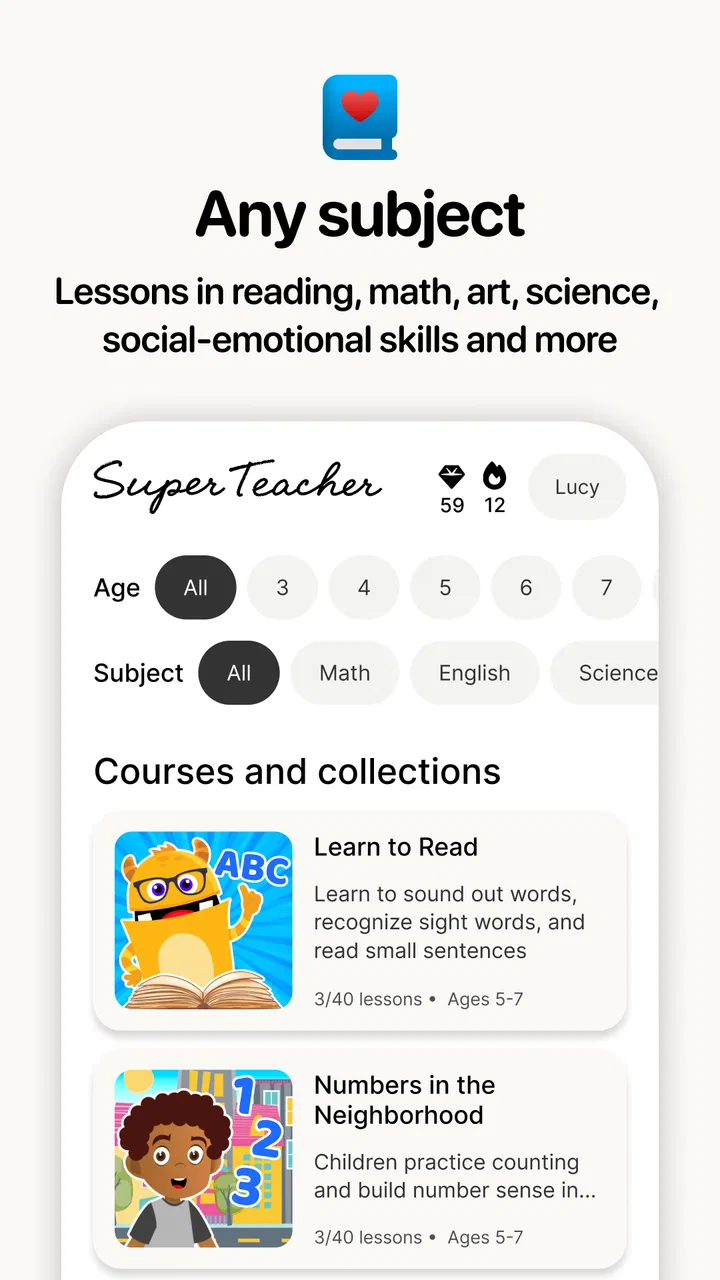
Super Teacher is an educational app designed to enhance learning experiences for students by providing a range of interactive lessons and quizzes. It covers various subjects, tailored to different educational levels, and includes features like progress tracking, personalized learning paths, and engaging multimedia content to make learning fun and effective.
02Is Super Teacher suitable for all age groups?
Super Teacher is designed to cater to a wide range of age groups, from early learners to high school students. The app offers age-appropriate content and lessons designed to align with school curricula, making it a versatile tool for students at different educational stages.
03Does Super Teacher require an internet connection to function?
While many features of Super Teacher can be accessed offline, such as previously downloaded lessons and quizzes, an internet connection is required for updates, accessing new content, and utilizing interactive features like live tutoring sessions. This ensures users always have access to the latest educational materials.
04Are there any in-app purchases or subscriptions in Super Teacher?
Super Teacher offers both free and premium content. While the app provides a range of free resources, there are optional in-app purchases and subscription plans that unlock additional features, such as advanced lessons, personalized tutoring, and ad-free experiences. These options enhance the learning experience but are not mandatory for basic use.
05How does Super Teacher ensure the quality of its educational content?
Super Teacher collaborates with experienced educators and subject matter experts to develop its content. Lessons are regularly updated to align with current educational standards and curricula. The app also gathers user feedback to continuously improve and expand its offerings, ensuring a high-quality learning experience.
Pros
- Intuitive user interface for easy navigation.
- Wide range of educational resources available.
- Customizable lesson plans for teachers.
- Interactive quizzes to engage students.
- Offline access to materials.
Cons
- Limited language options available.
- Requires frequent updates.
- Some features behind paywall.
- Occasional app crashes reported.
- Limited parental controls.

Super Teacher
Gallery